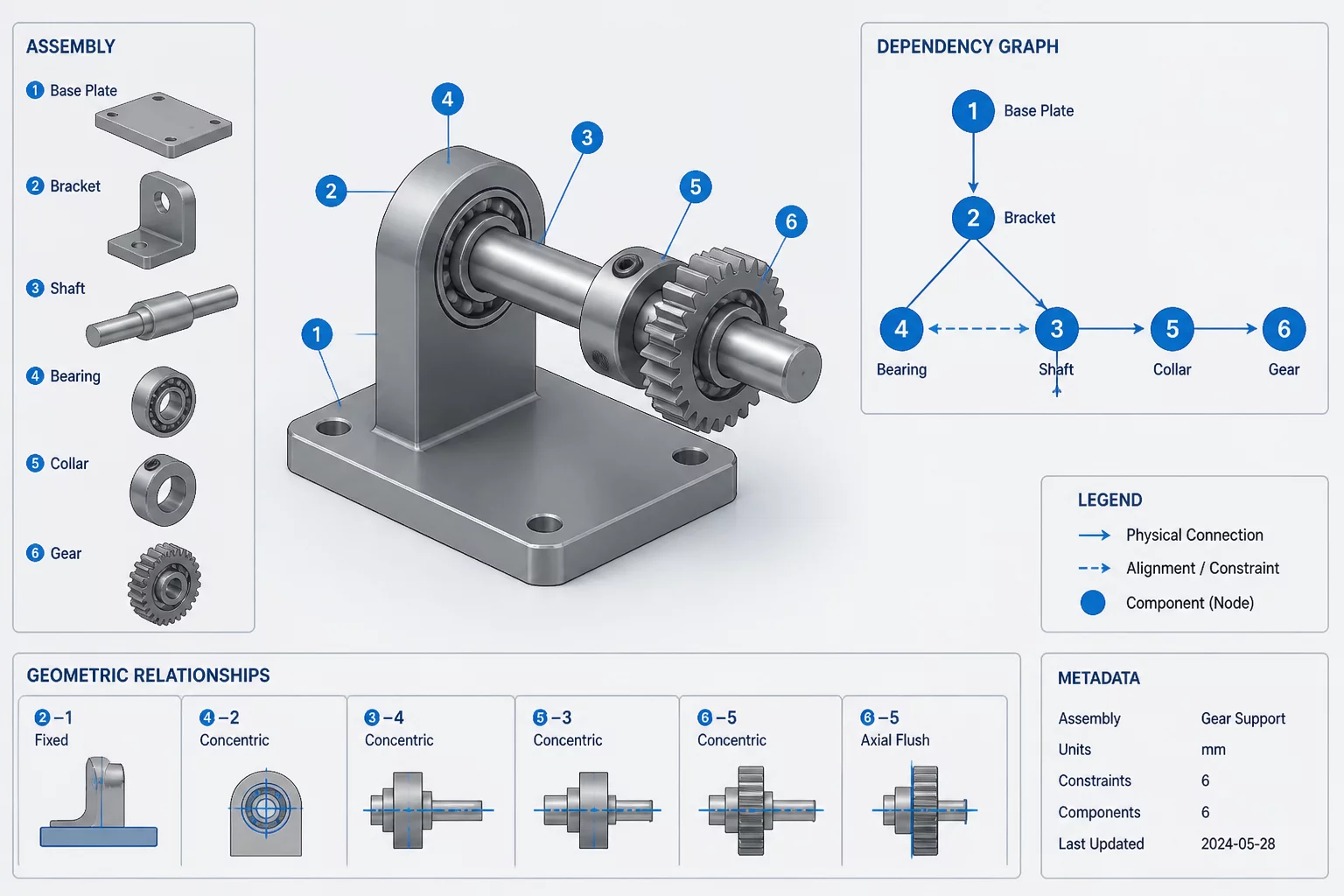
In modern mechanical design, components do not exist in isolation. Every dimension, mating surface, and geometric constraint establishes a relationship that propagates through the assembly. Component dependency mapping is the systematic process of identifying, documenting, and analyzing these geometric linkages to predict how variation in one part influences neighboring components. By constructing a clear map of these relationships, engineers can identify critical dimension paths, isolate sensitivity points, and establish robust tolerance budgets before manufacturing begins.
Core Concepts & Methodologies
Understanding the chain of physical interfaces requires a structured approach to assembly topology. A dependency map visualizes parts as nodes and mating interfaces as edges, exposing closed loops where tolerances accumulate. This methodology enables engineering teams to systematically evaluate design revisions, determine the downstream impact of dimension changes, and assign realistic tolerances that balance manufacturing cost with assembly yield.
- Clear visualization of the dimensional chains and stack-up paths across multi-part systems.
- Proactive identification of critical-to-quality (CTQ) dimensions that drive overall assembly fit.
- Streamlined engineering change management by instantly exposing affected neighboring components.
- Optimization of tolerance allocations to reduce production costs without compromising functional requirements.