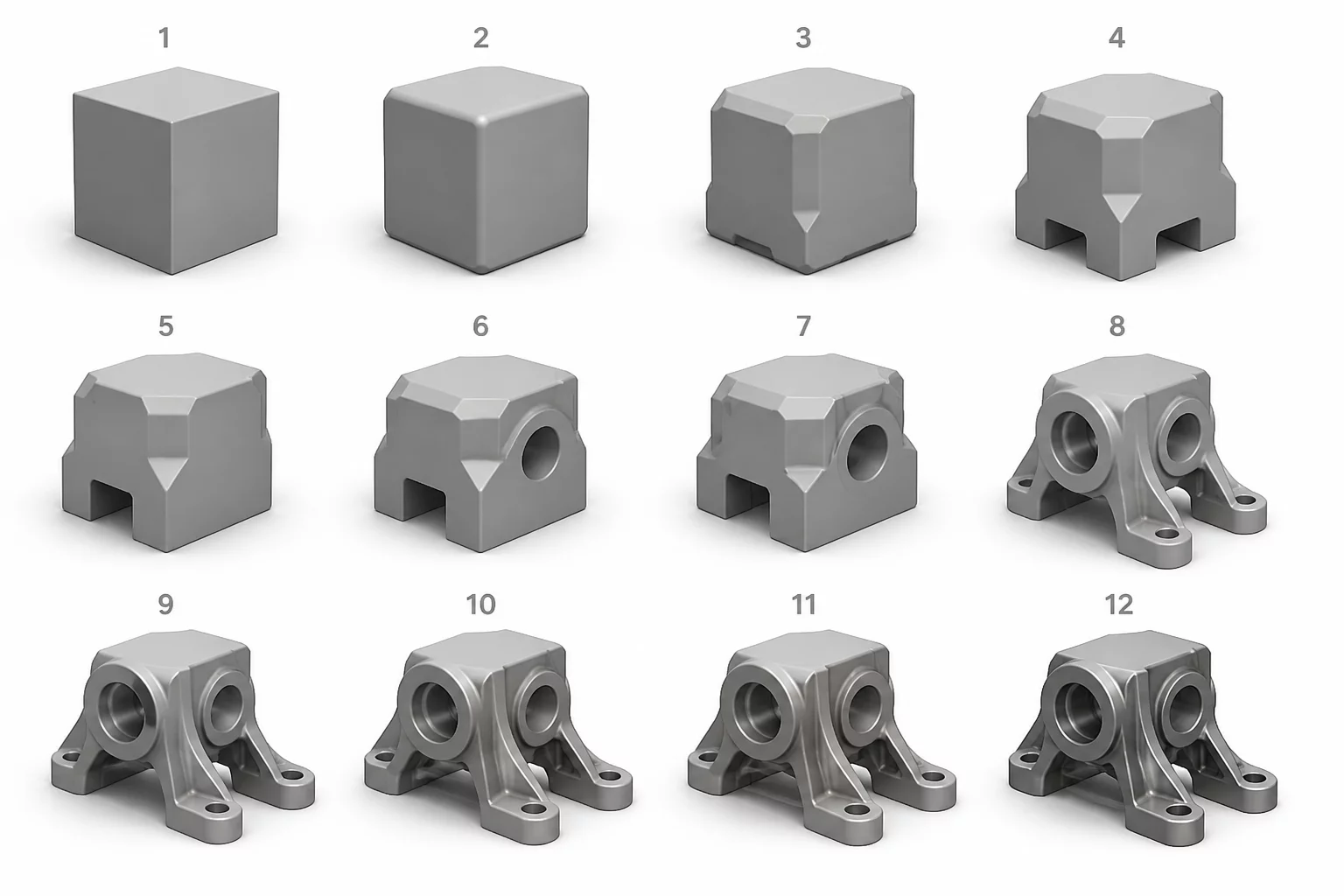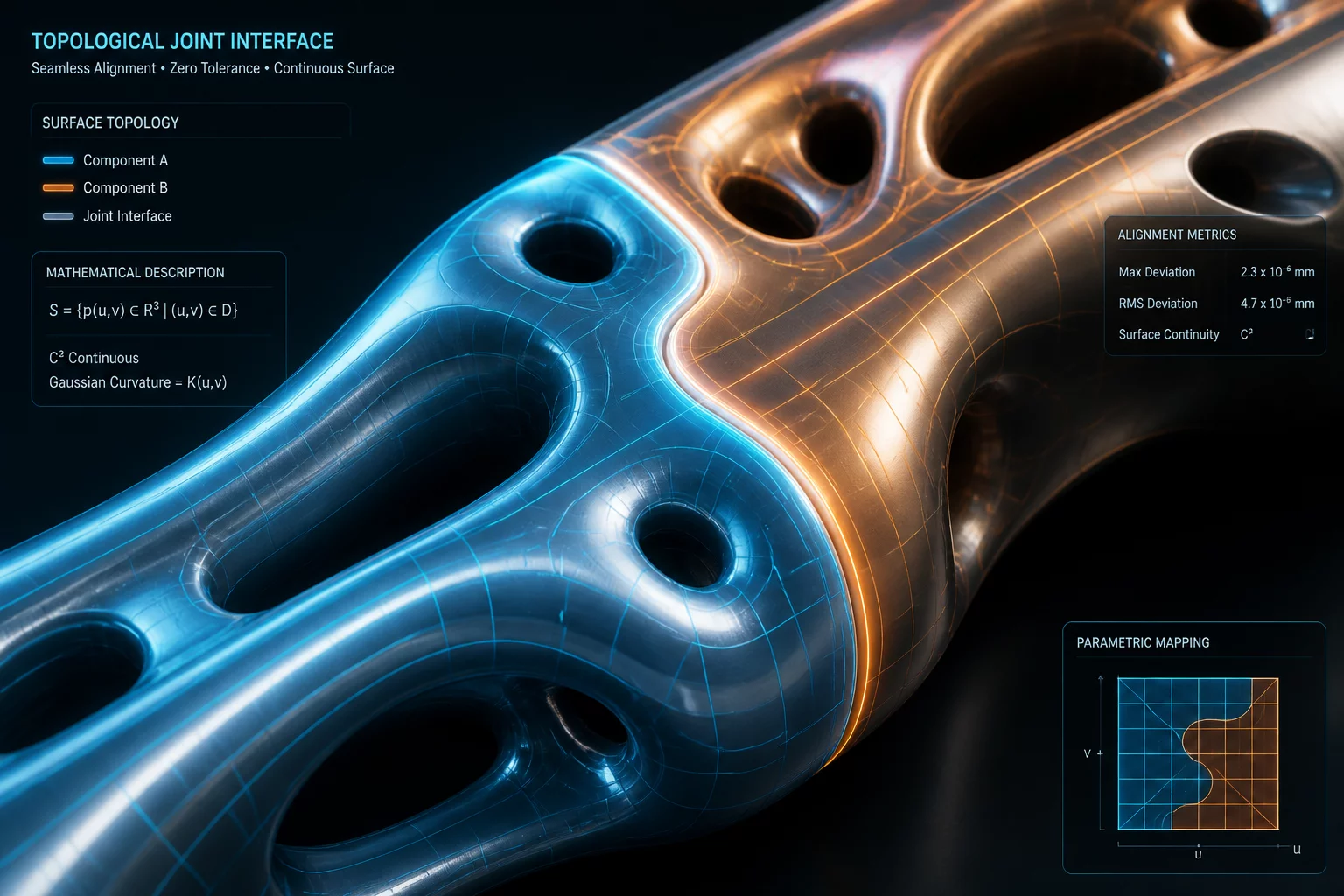
Achieving flawless alignment between complex mechanical parts requires a deep understanding of surface mating interfaces. In modern high-precision engineering, mating surfaces are rarely simple flat planes. Instead, engineers must design and analyze organic contours, complex curvatures, and interlocking geometric features. This program explores the fundamental math and practical CAD techniques needed to model and evaluate these critical interfaces, ensuring structural integrity and proper fitment under real-world manufacturing tolerances.
Core Concepts & Methodologies
The curriculum dived deep into the physical behavior of mated components. You will study how localized geometry changes propagate through assemblies, affecting neighboring features and overall tolerance stack-ups. By analyzing constraints, force distribution, and material boundary conditions, you can prevent interference issues long before the first prototype is machined.
- Understand the mathematical principles of 3D constraint mapping across curved surfaces.
- Master the analysis of tolerance stack-ups on organic, non-planar interfaces.
- Learn how geometry modifications affect downstream assembly components.
- Implement validation workflows to ensure design intent matches factory floor output.